
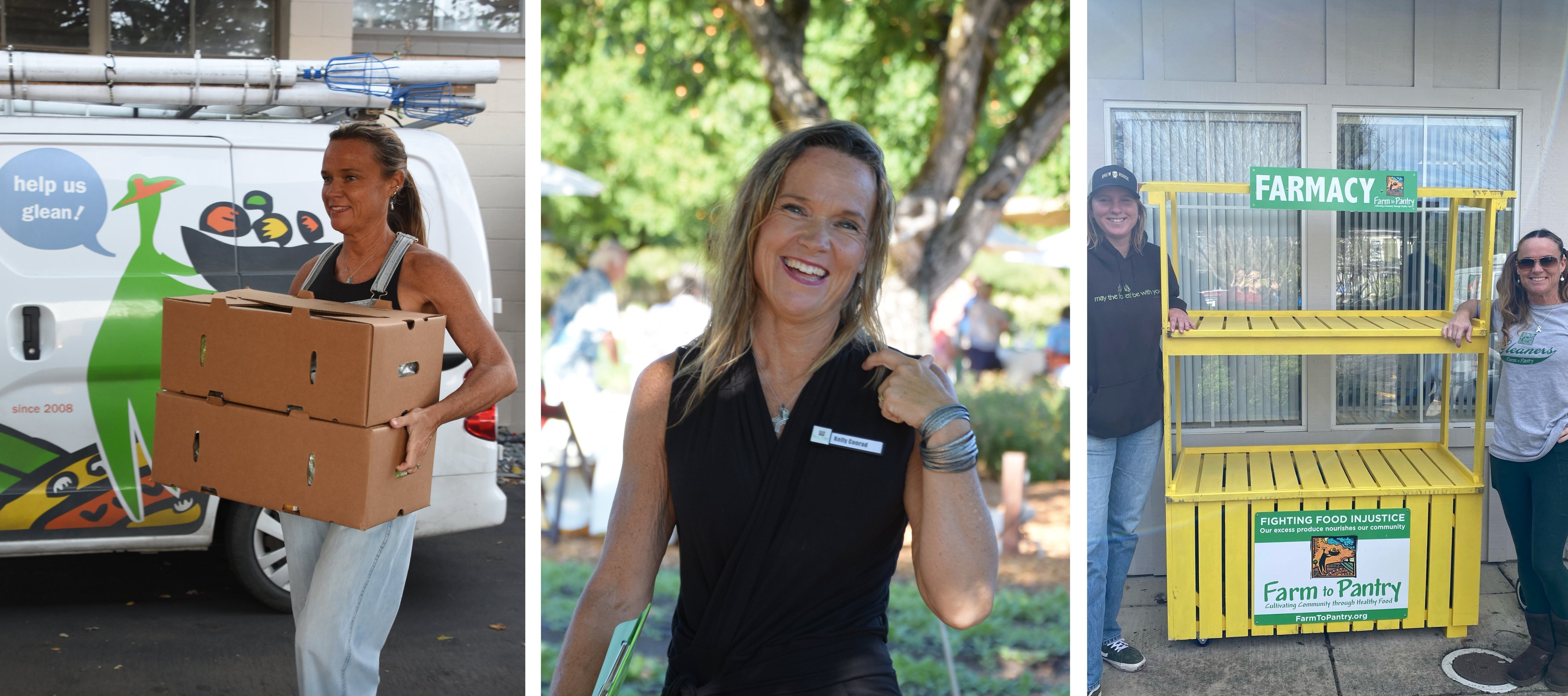
March is Women's History Month, and this year's theme: "Leading the Change: Women Shaping a Sustainable Future" couldn't be more fitting for our community. From vineyards to farms to food justice work, women are at the forefront of creating a more sustainable agricultural landscape. Today, we're thrilled to feature Kelly Conrad, Community Outreach & Development Director for Farm to Pantry.
Farm to Pantry (F2P) is a non-profit gleaning organization based in Healdsburg, CA, connecting surplus produce to those in need with a mission to eliminate food waste and hunger. F2P brings together our communities to end food injustice and reverse global warming by rescuing and sharing locally-grown food with those who have been systematically marginalized.
As a woman leader working at the intersection of food systems and community
well-being, what does "Leading the Change: Women Shaping a Sustainable
Future" mean to you personally?
Community well-being needs to get back to “being well.” It seems to be plagued by fear and anxiety, which sadly in many cases is well-justified, but results in disengagement, quick tempers and shying away from connection. Trust and compassion are rare commodities these days, but I feel strongly that women are just the leaders to thrust them back into the spotlight and re-engage the seemingly long lost term the “greater good.” We need to get back to taking care of each other and cultivating more community for a sustainable future. I think women have the right kind of heat to torch “othering” and ignite the flame of nurturing ALL, us as a whole, starting with our most basic needs. In my case that means applying these principles to food and building a more equitable food system.
What is one initiative or program at Farm to Pantry that you're most proud of in
terms of creating sustainable food access?
Our Farmacy Carts have always been a beneficial community resource, but how the program has grown and evolved is what I am most proud of. It is beautifully rooted in community: the wood has been sourced from old wine casks; students at the local high school Shop Class or retired wood workers have built the carts, and local businesses sponsor the carts to showcase how they give back to their communities.
How do you see the role of women evolving in creating more equitable and
sustainable food systems?
I think traditionally women have always been associated with food the making and the providing of it, nurturing has always been part of the inherent role of women in society. So I think it is a natural fit for women to be a part of the discussion about how food should be a basic right and available to everyone, not just the lucky few who can afford it. I think there also has to be sensitivity towards the individuals within the food system in order to preserve dignity and avoid “othering,” and women tend to be more agreeable and collaborative, making us the ideal candidate for the job—I think we naturally have what it takes to bring people together and come up with fair and equitable solutions.
What advice would you give to other women considering using their professional
skills to support food justice and sustainability work?
I would advise other women to not let overwhelm consume them. It is so easy to to be daunted by how HUGE this work is and how much there is to be done, so it is absolutely essential to focus on the task before you and take the little wins when they come. Doing things a little bit at a time is EXACTLY how the big stuff gets done.
What keeps you motivated on the hard days when working toward food security
for your community?
What keeps me motivated on the hard days is the people, our community. Amazingly, it is often those facing the greatest challenges who are the most positive and kind…showing me and proving to me that helping others is the best way to make yourself feel better. The best part is that the feeling endures; it is not fleeting.
What's one thing you wish more people understood about food justice and
sustainable food systems?
I wish more people understood that many who receive services or who utilize public assistance are hard-working individuals who often have multiple jobs. I have been working in food justice for nearly a decade now and have yet to meet someone who is just idly receiving subsidies and frittering away time with no purpose. It breaks my heart when I see some people dismiss folks as being freeloaders of the system when in reality, they are far from it.
Who are the women who've inspired your journey from the wine industry to food
justice work?
Gina Gallo has been my inspiration for many reason, but I worked very closely with her for 7 years, and her work with Feeding America was always moving. She didn’t just “throw money” at it but was actively involved and really cared about nourishing people with good food (and not just filling bellies with calories).